


Book Reviews
Richard Jean So. Redlining Culture: A Data History of Racial Inequality and Postwar Fiction. New York, NY: Columbia University Press, 2020. 240p. Paper, $20.00 (ISBN 978-0231197731).
In the past few years, we’ve seen more conversation around the lack of diversity in publishing. Even before the civil rights protests of 2020, we had regular news and opinion articles from industry publication Publishers Weekly, the Lee and Low Diversity Baseline survey, the State of Racial Diversity in Romance Publishing Report, diversity statistics from the Cooperative Children’s Book Center (CCBC), and the VIDA Count, among other smaller-scale efforts to highlight the problem.
Richard Jean So’s Redlining Culture: A Data History of Racial Inequality and Postwar Fiction adds to this conversation through big data analysis of literary fiction from 1950 to 2000. The book is a slim and focused monograph in six parts addressing different aspects of the literary cycle, from publication to reception and recognition to scholarly study. Professor So, who teaches at McGill University, is a clear and thoughtful writer, and this is particularly helpful to those new to big data and machine learning. Each chapter focuses on a different data set, and plain language is used to explain the decisions around each query. The outputs and conclusions are accompanied by tables and charts that at times are difficult to see (because they are a little small) but are nonetheless valuable in visualizing the trends and outliers. It is important that we dig into the numbers, he insists, because in the words of Toni Morrison’s character Denver in Beloved, “If you can’t count, they can cheat you.”
In his compelling introduction and first chapter, So describes how he identified Random House because, among the big publishers, it has a reputation for diversity and is notable because of its association with Toni Morrison. He counts the percentage of novelists by racial identity, the number of black versus white characters in these books, and the kind of language used to describe these characters. We learn through an endnote that his data set is acquired by looking through WorldCat entries for novels published by Random House. In this brief endnote, So acknowledges that selecting from WorldCat is an imperfect process but that, “the judgements of Librarians who create the WorldCat standard represent a coherent baseline” that is adequate to determining a corpus. We can apply this same logic, in that case, to Web of Science and JSTOR, which he also uses to form his data sets in later chapters. For those of us familiar with bias in library discovery systems, this is distressing, but I don’t know if So is aware of the issues thoroughly explored in Matthew Reidsma’s Masked by Trust: Bias in Library Discovery (2019).
So starts with the “count” that 97 percent of books published by Random House in this time period are by white authors. This is a statistic that we see repeated throughout this book, as though So wants us to remember and incorporate this fact about a publisher that purportedly supports diversity in literature. We also learn that white authors are represented in 90 percent of book reviews, 98 percent of best sellers, and 91 percent of book prizes. None of this is a surprise, but what I did find shocking is that white characters are described with more semantic variance while black characters are stereotyped and stagnant across the five decades. In brief, white characters are allowed growth and change, while black characters are not. For example, in the 1950s, white characters are described as “Christian” or “clergy.” By the 1970s, white characters are more likely to be “lady” or “gentlemen.” Black characters, on the other hand, are described throughout the decades as “boy,” “gentleman,” and “fellow” (51–53) and are frequently treated as props. In this and other in-depth text analysis that compares books by white authors, black authors, and POC authors in (first) literary reviews and (second) recognition through commercial and critical success, So puts to rest some of the enduring myths of book publishing—that authors are vetted for the quality of their work; that there are a lot of diverse books being published; that we have reached volume and success with African American literature. It is all whiteness; whiteness is the defining feature of American publishing.1
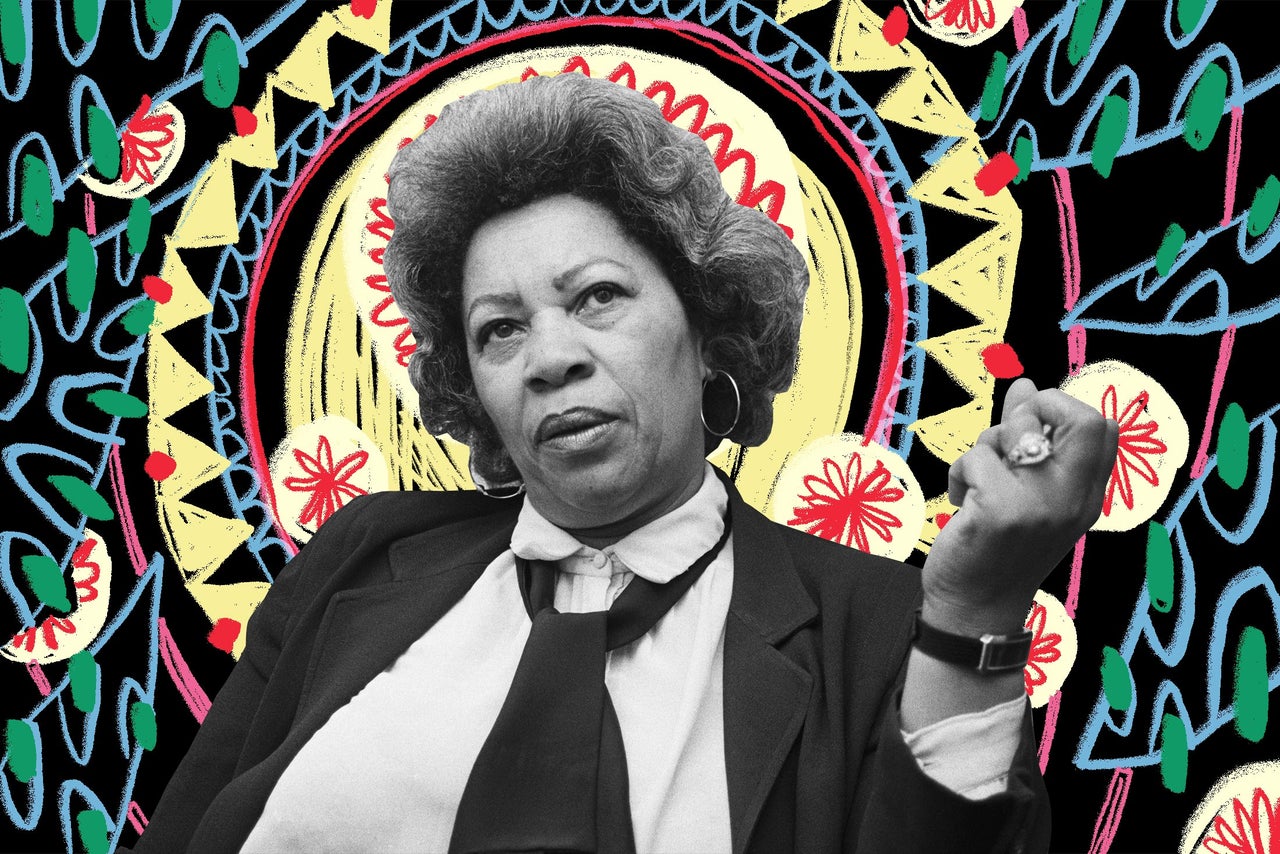
This conclusion is apparently at odds with the prevailing sense in academic scholarship that literature is doing very well in its quest for more diverse voices. In the penultimate chapter, entitled “Consecration: The Canon and Racial Inequality,” the reader is left to ask who or what, exactly, is being made sacred? Is it the study of literature, and its perception of itself as a field that espouses diversity and critical thought? Or is it the canonization of Toni Morrison, who looms large throughout So’s analysis, and her ilk by scholars like Houston Baker and Henry Louis Gates, Jr., in their efforts to establish Black studies? In his text analysis of academic literary articles, So identifies a distinctive shift in how race is discussed before and after 1995, as “the ascent of cultural studies offered the discipline an opportunity to begin focusing on the contemporary field of literature as a material site of inequality” (167). However, in that same text analysis, So also finds the word “inequality” missing from the academic conversation, and his conclusion is that, by not discussing inequality specifically, the field is missing a big picture understanding of racism in literature. I am inclined to argue that the more commonly used “whiteness” can be seen as a stand-in for “inequality,” but I take his point that literary studies, and academia writ large, has little real perception of the large-scale inequities in publishing.
The book is, at its heart, a text analysis rather than a sociological one, and So addresses questions of what is rather than why, leaving aside questions like who profits from a white-centered industry. I would be curious to see his analysis on publishing from the last two decades. We have seen a shift in representation and recognition that has led to more choices for readers, as shown by the lists compiled by We Reads and We Need Diverse Books (WNDB). If, as So implies, Octavia Butler’s time is now (134), then what does now look like in terms of publishing’s diversity numbers? This question supports So’s argument that these numbers are important; and, since his numbers are based on library and research databases, I think library workers should be thinking carefully about how their work has impact on such large-scale digital humanities scholarship.—Charlotte Roh, California State University San Marcos
Notes
1. As an aside, in So’s analysis, he found that one of the defining features of white-authored literature is the heavy use of adverbs, so lots of qualifiers (121). I found this hilarious, but also it aligns with what we’ve learned about how the CIA defined good literature in its funding of the Iowa Writers Workshop and MFA programs across the country. For more on this, see Eric Bennett’s Workshops of Empire: Stegner, Engle, and American Creative Writing during the Cold War (2015, University of Iowa Press)

This work is licensed under a Creative Commons Attribution-NonCommercial 4.0 International License.
Article Views (By Year/Month)
| 2026 |
| January: 63 |
| February: 85 |
| March: 86 |
| April: 74 |
| May: 59 |
| June: 42 |
| July: 46 |
| August: 70 |
| September: 58 |
| October: 17 |
| 2025 |
| January: 15 |
| February: 26 |
| March: 18 |
| April: 25 |
| May: 15 |
| June: 21 |
| July: 16 |
| August: 29 |
| September: 36 |
| October: 39 |
| November: 57 |
| December: 48 |
| 2024 |
| January: 32 |
| February: 16 |
| March: 19 |
| April: 20 |
| May: 24 |
| June: 17 |
| July: 26 |
| August: 11 |
| September: 17 |
| October: 12 |
| November: 11 |
| December: 6 |
| 2023 |
| January: 35 |
| February: 12 |
| March: 20 |
| April: 32 |
| May: 37 |
| June: 29 |
| July: 23 |
| August: 15 |
| September: 27 |
| October: 18 |
| November: 38 |
| December: 27 |
| 2022 |
| January: 0 |
| February: 0 |
| March: 226 |
| April: 110 |
| May: 33 |
| June: 12 |
| July: 14 |
| August: 16 |
| September: 15 |
| October: 21 |
| November: 21 |
| December: 5 |